

Stop scrubbing. Start using the system that does the work for you.
Two-step washing is built for operators dealing with heavy grime, mineral staining and complex surfaces. Instead of relying on aggressive chemicals or manual effort, two-step washing changes how the job gets done.
This is a controlled cleaning system. It uses chemical reaction, application method, dwell time and correct setup to remove contamination at scale. When done right, it reduces labour, improves consistency and delivers a faster clean across every vehicle.
What is Two-Step Washing?
Standard washing relies on pressure and manual effort. Two-step washing relies on chemistry and control. It uses two opposing pH chemicals applied in sequence to break down different contamination types:
Step 1 – Acid Wash (Low pH)
Breaks down mineral-based contamination like calcium, red dirt and road film.
Step 2 – Alkaline Detergent (High pH)
Lifts oils, grease and remaining organic grime.
This sequence allows each chemical to do its job properly. The result is a more complete clean without aggressive brushing or overuse of product.
Where it Delivers the Most Value
Two-step washing is built for heavy-duty environments where contamination builds fast and standard washing struggles. You will see the strongest results on:
- Concrete agitators and equipment
- Water trucks with calcium staining
- Fleet vehicles exposed to red dirt and mineral deposits
- Garbage trucks, tippers, cranes and excavators
- Equipment with irregular shapes where brushes can’t reach
If the contamination is mineral-based, this system works.
Why Operators Move to a Two-Step System
The shift is not about cleaning differently. It is about improving output across the entire wash process.
Key gains:
- Reduced cleaning time across fleets
- Less manual brushing and labour
- Cleans into joints, seams and hard-to-reach areas
- Delivers consistent results across vehicles and operators
- Reduces risk of micro-scratching from brushing
How the Process Works
This is a controlled sequence. Each step matters.
-
-
Pre-wet the surface: Always start with a wet surface. Acid on a dry surface increases risk of damage. As a rule, never apply acid to a dry surface.
-
Apply Acid Wash (Step 1): Apply using controlled spray or foam. Keep the surface wet. Do not allow the product to dry.
-
Apply Alkaline Detergent (Step 2): Apply over the top while the acid is still active. This drives the reaction and lifts remaining contamination.
-
Rinse Thoroughly: Use high pressure to remove all residues and leave a clean, consistent finish.
-
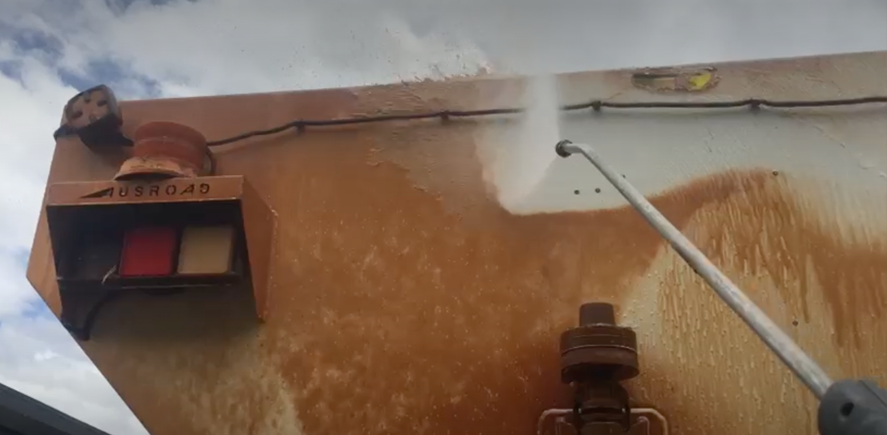
Following is a before and after example:


The Application Method Drives Results
How the chemical is applied directly affects how it behaves:
- Mist application → deeper penetration, more aggressive
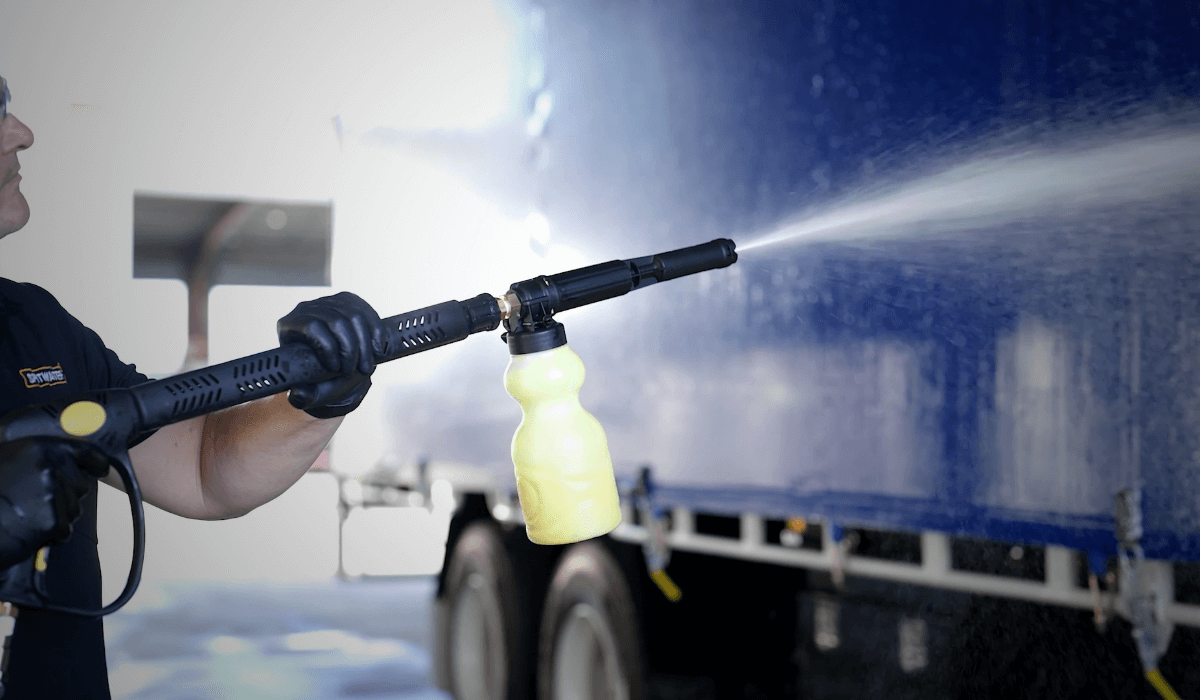
- Foam application → increased dwell time, more controlled
- Flooding → less penetration, lower impact
Incorrect application can lead to inconsistent results or surface damage. Correct application delivers repeatable performance.
The System Matters More Than the Chemical
Two-step washing is not a basic setup. Results depend on the full system working together.
To get the result safely and consistently, you need the following:
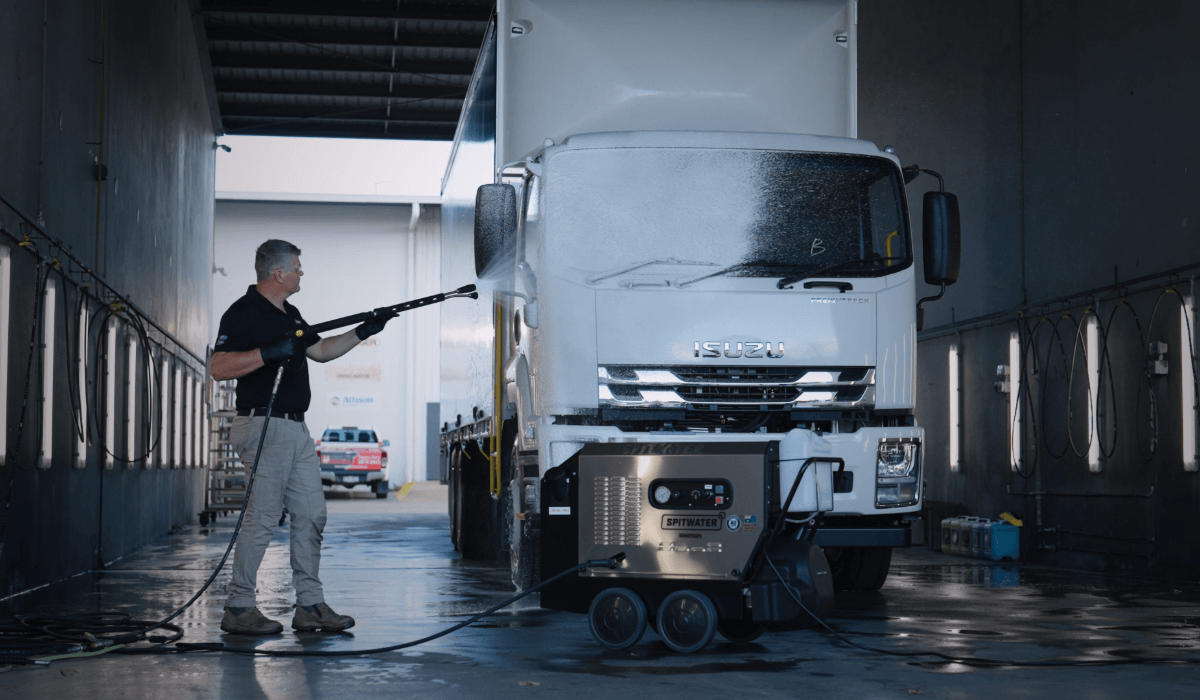
- High-pressure chemical injection system (e.g. ST160)
- Stainless steel injectors suited for acid application
- Correct nozzle and dilution setup
- A pressure cleaner matched to the application
- Operator understanding of surfaces and dwell time
The outcome is driven by the full system, not a single component.
Two Step Wash is a Trained Process
This is a trained process, not a general cleaning method. Because of the type of chemicals, surfaces and applications, it's important that operators understand:
- Surface types and sensitivity
- Chemical behaviour and dwell time
- Application techniques
- Rinse requirements
Correct use of the system delivers fast, repeatable results across fleets.
⚠️ Safety & Handing ⚠️
This is a professional-use product. Incorrect use can cause surface damage or injury.
- Always wear appropriate PPE
- Always apply to a wet surface — never apply to dry surfaces
- Do not allow product to dry on surfaces
- Do not exceed recommended dwell time
- Always test on a small, inconspicuous area before full application
- Use correct dilution, equipment and application method
- Incorrect application (mist, foam or flood) can increase risk of damage
- Avoid use on hot surfaces or in direct sunlight
- Take care on aluminium, painted and sensitive surfaces
- Avoid uncontrolled runoff into the environment
- Carry calcium gluconate gel when handling acid-based products
Is Two-Step Washing Right for Your Operation?
This system is suited to operators who:
- Wash fleets regularly
- Deal with mineral-based contamination
- Want to reduce labour and cleaning time
- Are prepared to invest in proper setup and training
If you’re looking for a quick spot cleaner, this isn’t it.
If you want a repeatable, scalable system that gets the job done properly, this is where it fits.
Recommended System Setup
To get the best results, use the full FlowRPM system:
Step 1: FlowRPM Acid Wash & Brightener
Step 2: FlowRPM Touchless Fleet Wash
System: SPITWATER pressure cleaner with chemical injection setup
Optional:
-
-
-
Foam system for increased dwell time
-
Applicators for detailed cleaning
-
-
.png "Electric Pressure Cleaners: Performance for Controlled Environments")
Comments